How to Let Go of Hurt & Trust Allah Again
When hurt makes it hard to trust Allah again — an honest, Islamic guide to healing your relationship with Allah after pain, loss, and heartbreak.
بِسْمِ اللَّهِ الرَّحْمَنِ الرَّحِيم
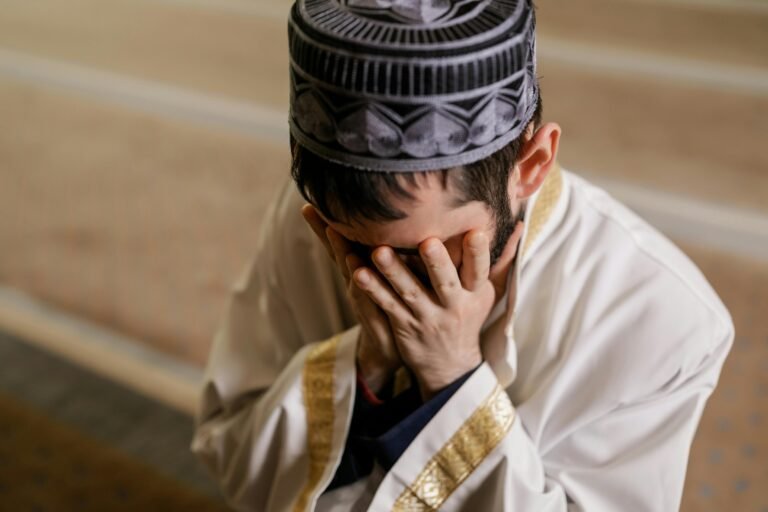
Can I say something that might feel uncomfortable? Sometimes, when we have been deeply hurt — by a person, by a loss, by life simply not going the way we believed it would — we don’t just lose trust in that person, or that situation. We quietly lose trust in Allah too.
We don’t say it out loud. We would never say it out loud. But it is there — a quiet pulling away. A distance in salaah. A reluctance in du’a. A voice that says: I asked, and He didn’t answer. I trusted, and it still fell apart. Why would I open my heart to that again?
If any of this resonates with you, I need you to hear this first: you are not a bad Muslim. You are a human being who has been hurt, and your heart is responding the way hurt hearts do. The first step to trusting Allah again is not forcing yourself to feel what you don’t feel. It is being honest about where you actually are.
Anger at Allah is not kufr
Let’s address the thing no one talks about. You may not just feel distant from Allah — you may feel angry at Him. Angry that He allowed this. Angry that your du’a went unanswered, or seemed to. Angry that someone else who seemed to deserve it less was protected while you were not.
That anger is human. The Quran and Sunnah do not demand that you suppress it. What they ask is that you bring it to Allah rather than away from Him. The difference between anger that harms your iman and anger that deepens it is where you direct it. The prophets — Yunus, Ayyub, Ibrahim, Musa — every single one of them expressed their pain, confusion, and overwhelm directly to Allah. That is not weakness. That is the most intimate form of faith.
What happened to the prophets when they were hurt
Nabi Ayyub (AS) lost everything — his health, his wealth, his children — and his response was:
أَنِّي مَسَّنِيَ الضُّرُّ وَأَنتَ أَرْحَمُ الرَّاحِمِينَ
“Verily, adversity has touched me, and You are the Most Merciful of the merciful.” (Al-Anbiya, 21:83)
He did not pretend he was fine. He named his pain directly to Allah. And then — then — came the relief.
Nabi Yunus (AS) found himself swallowed in darkness after what felt like failure, and his cry was the famous:
لَّا إِلَـٰهَ إِلَّا أَنتَ سُبْحَانَكَ إِنِّي كُنتُ مِنَ الظَّالِمِينَ
“There is no deity except You; exalted are You. Indeed, I have been of the wrongdoers.” (Al-Anbiya, 21:87)
Not a declaration of calm. A cry from the belly of a whale, in utter darkness. And Allah responded. These are not stories of people who trusted easily. They are stories of people who chose to turn toward Allah with their pain rather than away from Him — and found that He was already there.
Understanding al-qadr without it becoming resignation
Al-qadar — divine decree — can be misused to tell people to simply accept their pain and move on. But that is not what al-qadar means. It means that nothing reaches you except by Allah’s permission, and that nothing reaches you that does not carry within it wisdom, even when that wisdom is not yet visible to you.
وَعَسَىٰ أَن تَكْرَهُوا شَيْئًا وَهُوَ خَيْرٌ لَّكُمْ
“And it may be that you dislike a thing while it is good for you.” (Al-Baqarah, 2:216)
This verse is not asking you to feel grateful for your pain right now. It is asking you to hold open the possibility that you do not yet have the full picture. That is a different — and much more honest — ask.
The practical path back to trust
Rebuilding trust in Allah after hurt is not one moment of surrender. It is a hundred small choices, made over time, to keep the door open.
Begin with honesty. Sit in your salaah and instead of performing serenity, tell Allah exactly what you are feeling. You do not need eloquent Arabic. You need honesty. He knows what is in your chest — He is simply waiting for you to bring it to Him.
Then begin to notice. Not the big miraculous interventions, but the small ones. The moment you found the right words exactly when you needed them. The friend who called. The verse that landed. When we are hurt, we often stop tracking Allah’s presence in our lives. Start again, gently, with small things.
Practice acceptance as a verb, not a feeling. You may not feel at peace with what happened. Acceptance does not require a feeling. It requires a decision — I will not let this wound permanently close me off from the One who can heal it. Make that decision, even when it is hard. Especially when it is hard.
The du’a for a wounded heart
The Prophet ﷺ taught a specific supplication for distress and grief — the du’a of Yunus — and instructed that no Muslim supplicates with it in sincerity except that Allah answers them. It is not magic. It is permission — permission to be broken before Allah and to ask Him to put you back together.
وَمَن يَتَوَكَّلْ عَلَى اللَّهِ فَهُوَ حَسْبُهُ
“And whoever relies upon Allah — then He is sufficient for him.” (At-Talaq, 65:3)
Trusting Allah again does not mean pretending the hurt did not happen. It means deciding, inch by inch, to let Him be enough — even now, even here, even with this wound that has not fully healed yet.