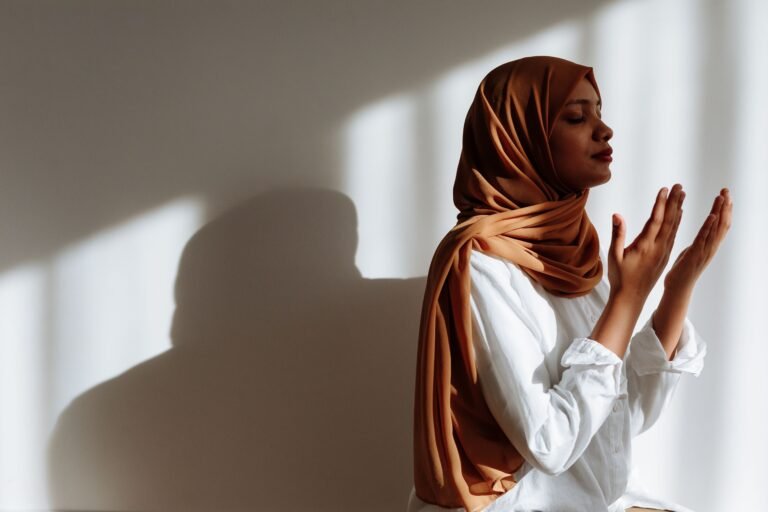

30 Habits of a Productive Muslim Woman
Productivity in Islam is not about doing more — it is about doing what matters, with intention, for the sake of Allah. A truly productive Muslimah is not the sister who checks the most items off her to-do list; she is the one who moves through her day with niyyah, tawakkul, and a deep sense of her purpose as a khalifah on this earth.
These 30 habits are drawn from the Sunnah, Islamic scholarship, and the wisdom of women who have built purposeful, faith-centered lives. Some will feel familiar. Others may challenge you. All of them are transformative when practiced consistently.
Spiritual Habits
- Pray all five daily prayers on time. This is the anchor of a Muslimah’s day, do not negotiate with it.
- Begin every task with Bismillah, transforming ordinary actions into worship.
- Read at least one page of the Quran daily, even on your busiest days.
- Perform morning and evening adhkar consistently they are a shield for your day and night.
- Keep a du’a journal where you record your prayers and track how Allah answers them over time. Reviewing this journal deepens your tawakkul immeasurably.
- Fast two Sunnah days each week (Monday and Thursday) when your health allows, the spiritual and physical benefits are immense.
- Give sadaqah regularly, even if it is small. The Prophet ﷺ said sadaqah extinguishes sins as water extinguishes fire.
- Perform at least two rak’ahs of Tahajjud or Duha prayer regularly, these voluntary prayers are powerful anchors of connection.
Mental and Emotional Habits
- Journal your thoughts and feelings daily. Writing brings clarity and helps you process emotions before they accumulate.
- Practice gratitude every morning by listing three specific blessings not generic ones, but specific, detailed ones that anchor you in the present.
- Limit your social media consumption to intentional windows of time rather than passive scrolling.
- Read one Islamic book per month, invest in your aqeedah, fiqh, and spiritual knowledge.
- Seek knowledge regularly, whether through online courses, halaqas, podcasts, or books. The Prophet ﷺ said seeking knowledge is an obligation upon every Muslim.
- Reflect on your nafs (self) weekly, where are you growing? Where are you falling short?
- Practise speaking kindly to yourself. The way you talk about yourself as a woman matters, your inner narrative shapes your outer reality.
Physical and Wellness Habits
- Prioritise sleep, aim for 7–8 hours. Sleep deprivation impairs your ibadah, your mood, and your productivity.
- Move your body daily. Even a 15-minute walk counts. Physical health is an amanah (trust) from Allah.
- Drink enough water throughout the day, a hydrated mind is a more focused, productive mind.
- Eat nourishing, halal food with consciousness. Eat to fuel worship, not to fill emotional voids.
- Take breaks during work or household tasks, the Prophet ﷺ modeled balance and discouraged overexertion.
Relational Habits
- Make salaam to everyone you meet it spreads love and earns reward.
- Check in on family and friends regularly. Maintaining ties of kinship (silat ar-rahim) is a major act of worship.
- Be a good listener. Give people your full presence, put your phone down, make eye contact, and listen to understand.
- Forgive quickly. Carrying resentment is a spiritual burden you were not designed to carry.
- Invest in your marriage or closest relationships with deliberate quality time each week.
Professional and Life Habits
- Plan your week every Sunday evening. A Muslimah with a plan is harder to derail than one who is reactive.
- Do your hardest task first (eat the frog). Tackling your most challenging responsibility in the morning capitalizes on peak energy and prevents procrastination.
- Review your goals monthly and reconnect them to your bigger why; your akhirah intention.
- Learn something new consistently; a skill, a language, a craft. Intellectual growth keeps the mind agile and grateful.
- End each day with a brief muhasaba (self-accountability); what went well, what you can improve, and what you are grateful for. Seal it with Istighfar.
How to Build These Habits Without Burning Out
Do not try to implement all thirty habits at once. That is the fastest road to overwhelm and abandonment. Instead, choose three habits to focus on for the next thirty days. Stack them onto existing anchors in your day (e.g., always do your du’a journal right after Fajr). Once those three feel natural, add three more.
Use a simple habit tracker, even a printed grid in your planner, to mark consistency. Research shows that visual tracking significantly improves habit adherence. And on days when you fall off, return without guilt. Tawbah and recommitment are themselves acts of worship.
A Word on Comparison
Social media will show you Muslimahs who appear to do everything beautifully; the tahajjud, the meal prep, the homeschooling, the thriving business. Remember: you are not competing with them. You are competing with who you were yesterday. Your productivity is measured not by Instagram metrics but by the scales on Yawm al-Qiyamah, where sincerity outweighs spectacle every time.
May Allah make you among those who are productive for His sake, steadfast in their habits, and rewarded abundantly for every small consistent effort. Ameen.